
Constellation Work Based on Bonding and Trauma
And how they differ from traditional Family Constellations
Franz Ruppert
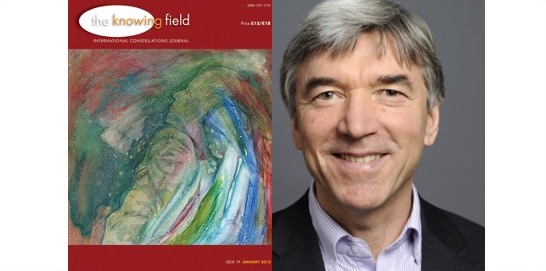
[This article was published in The Knowing Field, issue 19, Januari 2012]
Franz Ruppert is Professor of Psychology at the University of Applied Sciences in Munich. He gained his PhD in Organisational Psychology at the Technical University of Munich in 1985. Since 1995 he has focused on the causes of the more severe forms of mental illness, combined with his interest in bonding and attachment theories and modern trauma work. He came into contact with Hellinger’s work in the mid ’90s and developed his own form of constellations. He is the author of several books on trauma, bonding and constellations.
professor@franz-ruppert.de
www.franz-ruppert.de
My first Contact with Constellations
I first came into contact with constellations work in 1994. The Dean of the Faculty for Clinical Psychology at the University of Munich had invited Bert Hellinger to do a workshop there, which I attended. In the beginning I was very sceptical of what I saw along with nearly 200 other participants on the small stage in lecture room No. 2002, a lecture room I knew well from my former days as a student of psychology there. But when I was chosen twice as a representative in other people’s constellations, I couldn’t resist the growing fascination in me. I quickly sought contact with others in the area already working with constellations and I succeeded in joining a working group led by Robert Langlotz in Munich. With every constellation I experienced, I gained new insights into human relationships.
At that time, I had been stuck for several months in a very difficult relationship and couldn’t find any solution. My first constellation helped me find a good way out of the entanglement of being in a relationship with two different women. For the first time in my life, I understood that you can create constructive relationships for yourself. I realised that in relationships there are things that you can do and things that you can’t, if the relationship is to have a good future and not end up in disaster. Looking back, it shocks me that it took me nearly forty years of my life to understand such a simple truth about human relationships.
Further Developments
In 1995 | started doing my own family constellation seminars. As a psychologist I felt competent enough, even though today I realise that I actually knew very little about the human psyche and its often very confusing dynamics. To be a facilitator of family constellations I just copied what I saw in Hellinger’s seminars and what I picked up by studying his books and videos intensely.
In my first book I wrote about my experiences with constellations work and relationships (Ruppert, 2001). I was concerned with this topic because up to that time, the main focus of my professional life had been working in a scientific dimension with work and organisational psychology. With the help of constellations, I felt I could gain a lot of new understanding on questions to do with professional life; for example, in understanding conflicts in organisational teams and criteria for good leadership.
It became more and more clear to me that there are three psychic states after a traumatisation: the traumatised part, the stressed surviving part and the healthy part.
Because I had shifted my place of work from the Technical University in Munich to the Catholic University of Applied Sciences in Munich, I felt more and more drawn towards developmental and clinical psychology. So, I wanted to focus exclusively on family constellations rather than organisational work. Working with constellations, suddenly I could see so many new psychological dynamics in my psychotherapy clients.
It helped my studies at this time to read the works of John Bowlby, the founder of Attachment Theory (Bowlby, 2006 a,b,c), through which I understood that there are relationships with a bonding quality and relationships without this bonding quality. Bonded relationships have a completely different characteristic to non-bonded relationships. They follow their own rules.
A second very important influence for my constellations work was trauma theory. Through reading the works of Peter Levine (Levine, 1997), Judith Herman (2001) and Gottried Fischer & Peter Riedesser (Fischer & Riedesser,1998) I gained my first understanding of what trauma actually is and what events, such as the sudden death of a loved one, experiences of violence and sexual abuse can do to the human psyche. I suddenly understood that in constellations all bonding and trauma issues are there and you can see them clearly. You only have to watch carefully enough and make the right conclusions to understand within this framework what the representatives and clients are expressing. The constellations method shows the effects of trauma in bonding relationships over many generations. It opens up an access to a multi-generational perspective of psycho-traumatology. Trauma is passed on in bonding relationships from one generation to another.
So l started to develop a theory that I called ‘multi-generational psychology’. For me this theory should explain how mental illnesses came into existence. The first result was the book Verwirrte Seelen published in Germany in 2002. This book contains the basic concept of this theory where distinguish four different types of trauma:
- Existential trauma
- Trauma of loss
- Bonding trauma
- Bonding system trauma
Each category of trauma has its own psychological dynamics and is related to the development of symptoms of different mental disorders. Panic and anxiety disorders are the consequence of existential trauma, depression follows loss trauma, personality disorders can be seen as the outcome of bonding trauma, and psychoses and schizophrenia result from bonding system trauma.
In Verwirrte Seelen I particularly offered an alternative interpretation of those mental illnesses that are usually only treated within the psychiatric system, by medication. I criticise this as completely inappropriate as a means of helping those caught up in their trauma and bonding disturbances.
As my experience with clients suffering more severe psychological disturbances grew during these years I had sufficient material to write my next book published in German in 2006, entitled: Trauma, Bindung und Familienstellen. This book has since been translated into English, Russian, Spanish and Turkish, and explains the notion that trauma and bonding issues are the real reasons behind all relationship problems, psychological and even physical illnesses.
In this phase of my development, I also tried to adopt a style of working with the constellation to address these trauma issues. I put the client into the constellation quite early. together with her representative. I tried adding representatives for supportive resources such as ‘love’, ‘strength’ or ‘courage’ to the constellation to see what this did for the client, but I saw that usually these resources were consumed by the surviving part of the client. It was only some years later
Thinking more and more in terms of these splits, I realised that it didn’t make sense to represent the person in a constellation with just representative.
when I fully understood the process of psychological splitting that takes place after a traumatic experience that l understood why this was so.
To come to that point, I first had to understand what exactly a split in the structure of the psyche is and had to change my two-dimensional model that distinguishes only between traumatised and non-traumatised psychological structures, and expand it to a three-dimensional model. It became more and more clear to me that there are three different psychic states after a traumatisation: the traumatised part, the stressed surviving part and the healthy part (see Fig. 1).
Fig. 1: Three different personality structures after traumatisation
So in my next book, Seelische
Spaltung und innere Heilung (Splits in the Soul, 2011) I could make the step to thinking in terms of these different parts. I tried to clarify the difference between the healthy parts and the surviving strategies that very often disguise themselves as ‘sane’, ‘rational’ and ‘normal’.
Thinking more and more in terms of these splits, I realised that it didn’t make sense to represent the person in a constellation with just one representative. One representative can only show one aspect of the psychological structure of a traumatised personality at one time, and maybe also shift from one aspect to another quite quickly during the process of a constellation. So, it would be clearer to represent traumatised people with more than one representative in a constellation and watch the relational dynamics between the parts of one person and the different parts of other people represented in the constellation. However, that could become a very complicated process!
As a second important point in this book, I emphasised the fact that although resources play a large role in other trauma theories and methods, in fact they do not help with integration of the splits if the resources come from outside the psyche of the traumatised person, i.e. are offered by helpers. It is only if the client can overcome the urge of his surviving strategies to cling to resources offered from the outside, for example by health care systems and therapists, that it becomes possible tor his inner structure to change and move towards integration and lasting stability. In other words, it is only the client’s inner resources that can make a real difference, resulting in true integration.
I realised the very special quality of the symbiotically entangled surviving parts that up to now had been disguised as the natural state of children to get love from their parents, especially from their mothers.
Nevertheless, a lot of things still remained unclear for me. For many clients, working with what I now began calling ‘Trauma Constellations’ didn’t seem to change their basic suffering. It was only when I distinguished a specific dynamic that I called ‘symbiotic trauma’ that things became much clearer. In identifying the three different parts of the psyche resulting from a symbiotic trauma, I realised the very special quality of the symbiotically entangled surviving parts that up to now had been disguised as the natural desire of children to get love from their parents, especially from their mothers. This opened a completely new door to a different therapeutic approach: Children experience a symbiotic trauma when they cannot get into a stable and secure bonding relationship with their mother due to the fact that the mother is traumatised, and therefore psychologically split, and so not able to fully connect with her child and experience her feelings for her child without also experiencing the abyss of her own trauma. This makes the attempt to establish a secure bond with the mother a trauma for the child.
In order to stay in some form of contact with the traumatised mother, children develop six different surviving patterns:
- they struggle all their life to be loved properly by their mother, to get their mother’s love
- they idealise their mother
- they replicate her surviving strategies as their own
- they continually attempt to rescue their mother from her suffering
- they ignore their own suffering
- they continually become entangled with their mother’s trauma and identify with her trauma feelings
More and more I found that most of my clients suffered from symbiotic trauma, and so became extremely efficient in living their lives from the surviving strategies that developed from the original symbiotic entanglement. The crucial question therefore became: how is it possible to disentangle oneself from a traumatised mother?
Trauma Constellations and Family Constellations
Having understood the psychological dynamic of symbiotic trauma and its consequences, I could no longer close my eyes to the fact that all the essentials in family constellations work such as:
- working with the interrupted reaching out movement towards the mother to attempt a good connection
- taking in those who were excluded from the family system and giving them their appropriate place and acknowledgement
- re-establishing the correct ‘order of love’ in a family system
- bowing and making oneself the ‘small one in front of the ‘greater’ parents
- taking life as a gift from the parents, honouring and loving them whatever they have done to us
only serve to encourage the symbiotically entangled surviving parts of the person to cling to the illusion that the love of the mother and father can be achieved, so denying the reality of the trauma. In the traditional family constellation this illusion that the love of the mother can be achieved is sought by the client and is re-enforced by the facilitator.
In the traditional family constellation this illusion that the love of the mother can be achieved is sought by the client and is re-enforced by the facilitator.
In a family constellation, these kinds of solutions are constructed that may, for a while, satisfy the needs of the symbiotically entangled parts of the person. The price the client pays however, is the deepening of their splits and the continuation of their traumatisation. The construction of such solutions in the family constellation is only possible by denying logical thinking and replacing “knowing’ by believing and hoping. Family constellations in fact support the survival strategies of the person by distracting from an unbearable reality and encouraging living in spiritual and esoteric realms of the mind. The truth is that the child bonded with a traumatised mother whose capacity to love her child was severely compromised by her own trauma. This fact cannot be changed and healing the symbiotic trauma can only be achieved by staying with this reality.
As for the therapist, their own unresolved symbiotic trauma, and symbiotically entangled surviving strategies, augment their tendency to become an entangled helper. However, their unconscious commitment to avoiding their own symbiotic trauma, and so remaining symbiotically entangled, means that they are unable to work with symbiotically entangled clients, no matter how much they may believe that in their work they have the right answer to the problem.
New Ways
In my latest book therefore, I tried to figure out new ways to escape the trap of the symbiotic entanglement and find out how it becomes possible to create true inner autonomy. I realised that it was necessary to change the focus of the therapeutic approach radically from a focus on the system back to the individual. Whenever a client has a situation of entanglement represented in the constellation, and focuses their attention more towards the family members than themselves, the symbiotic entanglement continues; the client is still more concerned with the problems and desires of others, mostly of the mother, than with their own needs and suffering. In this new way of working with the constellation that I have developed, the ‘constellation of the intention’, we see just how much easier it is for the client to look at the suffering of others than to their own trauma. In other words, focusing on the suffering of family members becomes a distraction, a survival strategy, to avoid one’s own suffering. It seems less frightening to try and support all the others than to come into contact again with one’s own anxieties and painful childhood trauma experiences.
I developed a new format of constellations work that has only one thing in common with family constellations: that is that there are representatives.
As a consequence of that, I developed a new format of constellations work that has only one thing in common with family constellations: that is that there are representatives. There is no longer a representative for the client in the constellation; they are immediately in the constellation along with a representative for their ‘intention’. The ‘intention’ of the client for the constellation is the central figure in this type of constellation, and l am only willing to facilitate a constellation if the client has an intention for their therapeutic work. Everything that then takes place in the constellation depends on the relationship between the client and their intention. When I propose that the client puts other people in the constellation this comes entirely from what I understand is happening between the client and their representative. I only work with the client, and all representatives are completely free to show whatever they feel, think and want to express. The only thing the representatives are not allowed to do is physically hurt anybody in the room. The goal of the constellation is to help the client gain more clarity about their relationship to their intention, so they will be able to take a further step towards more personal autonomy.
The goal of the constellation is to help the client gain more clarity about their relationship to their intention, so they will be able to take a further step towards more personal autonomy.
After more than two years’ experience of working with this constellation format, I think it shows that there are four different general outcomes to the constellation:
- The healthy part of the client gains more ground in comparison to the surviving parts
- Survival strategies become clearly visible and can be seen as illusionary attempts to create solutions
- The contact between healthy parts and traumatised parts becomes more possible
- The healthy parts gain new ideas of how to use the liberty from former obligations, and how to create a new way of life finding real love beyond entanglement
Looking Forward
To clear my thoughts further I am working on a new manuscript. One thing I want to explain is why l have stopped using the term ‘soul’ as a central concept and why I feel it is clearer to find a more precise definition for the word ‘psyche’. I see ‘psyche’ as being all those processes that make reality available for a living organism. Why the psyche from time to time obstructs the living organism from reality, and why the organism then has to serve the needs of the psyche is one of those questions that has to be answered.
Complications during pregnancy and the birth process up until now in my theory are things that I have not yet dealt with, but in my therapeutic work there is increasing evidence that these are important because of the likelihood that they will cause early traumatisation for children. There is some evidence that for example, the caesarean section operation interrupts the development of autonomy in the child, and so makes the child symbiotically overly-dependent.
Furthermore, in my next book I will explain how it is possible to use the ‘constellation of the intention format in individual sessions.
There is a lot more to be investigated and carefully discussed in the field of the human psyche; there are some persistent therapeutic errors that have to be corrected and some misleading paths that have to be avoided completely, and still new ways to be discovered for integrating a split personality.
From the 26-28 October 2012 we are hosting the first international conference under the title ‘Symbiosis and Autonomy’ in Munich in order to show how constellations on the basis of bonding and trauma can be applied for different issues.
REFERENCES
Bowlby, J. (2006a) Bindung. (Attachment). Reinhardt, München, Germany.
Bowlby, J. (2006b) Trennung (Separation). Reinhardt, München, Germany.
Bowlby, J. (2006c) Verust (Loss) Reinhardt, München, Germany.
Fischer, G. & Riedesser, P. (1998) Lehrbuch der Psychotraurmatologis. Reinhardt, München, Germany.
Herman, J. L. (2001) Trauma and Recovery. From Domestic Abuse to Political Terror. Pandora, London., UK.
Levine, P. A. (1997) Waking the Tiger: Healing Trauma. North Atlantic Books, Berkeley, California, USA.
Ruppert, F. (2001) Berufliche Beziehungswelten. Das Aufstellen von Arbeitsbeziehungen in Theorie und Praxis. Carl-Auer-Systeme Verlag, Heidelberg. Germany.
Ruppert, F. (2002) Verwirrte Seelen. Der verborgene Sinn von Psychosen. Grundzüge einer systemischen Psychotraumatologie. Kösel, München, Germany.
Ruppert, F. (2005) Trauma, Bindung und Familienstellen. Klett-Cotta Verlag. Stuttgart, Germany.
Ruppert, F. (2007) Seelische Spaltung und innere Heilung. Klett-Cotta Verlag, Stuttgart, Germany.
Ruppert, F. (2009) Trauma, Bonding and Family Constellations. Green Balloon Publishing, UK.
Ruppert, F. (2010) Symbiose und Autonomie. Klett-Cotta Verlag. Stuttgart, Germany.
Ruppert, F. (2011) Splits in the Soul. Green Balloon Publishing, UK.